
REVIEW · HA LONG BAY
Journey to Inner Peace 3 Day Meditation at Yen Tu, Ha Long
Book on Viator →Operated by The Bodhi Journey · Bookable on Viator
Dawn meditation at Yen Tu resets your week. This 3-day retreat near Ha Long Bay pairs guided meditation with Buddhist teachings and simple cultural practices, so the quiet isn’t just planned, it’s practiced. You’ll sit, chant, move gently, and eat vegetarian meals in a setting tied to Holy Mount Yen Tu, with tea meditation and chanting at the heart of the rhythm.
I especially like the way the retreat links technique to meaning—history about Holy Mount Yen Tu and lessons like karma law help you understand what you’re practicing, not just when to close your eyes. And I really like the human touch: the guide Hung (and support from Anaya, when needed) keeps sessions clear, steady, and client-oriented, according to feedback from past participants.
One thing to consider: the schedule runs early and late. You’ll wake around 05:00 on days two and three and end with longer seated sessions—great if you want structure, less great if you’re chasing a slow, fluffy getaway.
In This Review
- Key highlights you should care about
- Why Yen Tu works better than a generic meditation weekend
- The 3-day rhythm: tea, chanting, and the discipline of dawn
- Day 1: Arrival, tea meditation, and learning the frame
- Day 2: Soul purification and chanting before breakfast
- Day 3: Mind understanding, walking meditation, and karma lessons
- Buddhist teaching you can actually use in daily life
- Vegetarian meals as part of the training (not just a perk)
- Small group size: why up to 15 people can feel like a big advantage
- Price and value: what you’re paying for at $315
- Logistics that can matter more than you think
- Who should book this retreat (and who might not)
- What to bring and how to prepare
- Should you book Journey to Inner Peace at Yen Tu?
- FAQ
- How long is the Journey to Inner Peace retreat?
- Where does the retreat start and end?
- What is the price?
- What’s included in the experience?
- Is there a mobile ticket?
- How big is the group?
- How fast will I receive confirmation after booking?
- What is the cancellation policy?
- Is the retreat suitable for most people?
Key highlights you should care about
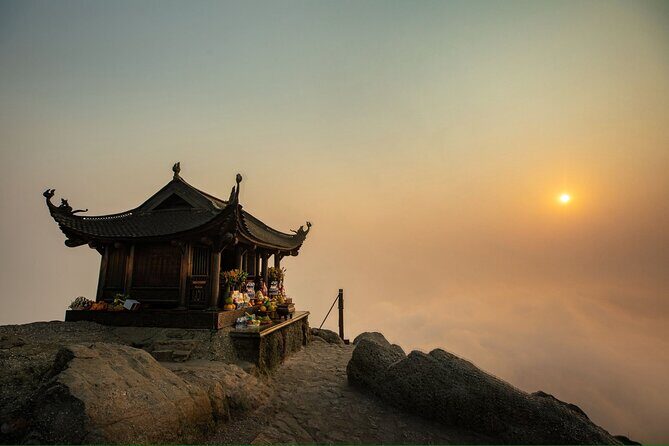
- Early-morning purification practice with soul purification meditation and bodhi mind chanting
- Tea meditation plus movement breaks like miracle breath and peace in every step
- Buddhist context that matches the practices, including karma law lessons and outdoor talks
- Compassion in action via mindful breathing and walking meditation paired with fish feeding
- Vegetarian meals provided across the retreat, including vegan lunch and dinners
- Small group size (up to 15), which helps the guidance feel personal
Why Yen Tu works better than a generic meditation weekend
Yen Tu is not a “sit in a room and call it peace” kind of retreat. The whole experience is built around a sacred mount-and-pagoda setting, and that matters. You’re practicing with the day shaped by temples, chanting, and the calm of a mountain environment, not just by a timetable on your phone.
The retreat also avoids the common problem of mindfulness tourism: it doesn’t treat meditation as a trend. It treats it as training. That’s why you get guided sessions and also time for teaching—history about Holy Mount Yen Tu, discussions about Buddhism, and lessons that connect back to what you just practiced.
Finally, you’re not doing this alone. With a maximum of 15 travelers, you’re more likely to get individualized attention when your brain wants to wander (which, fair warning, it will). Past feedback specifically praised Hung for being kind, knowledgeable, and client-oriented, which is exactly what you want when you’re learning techniques like chanting or breath-based practice.
Other Halong Bay cruises we've reviewed

The 3-day rhythm: tea, chanting, and the discipline of dawn
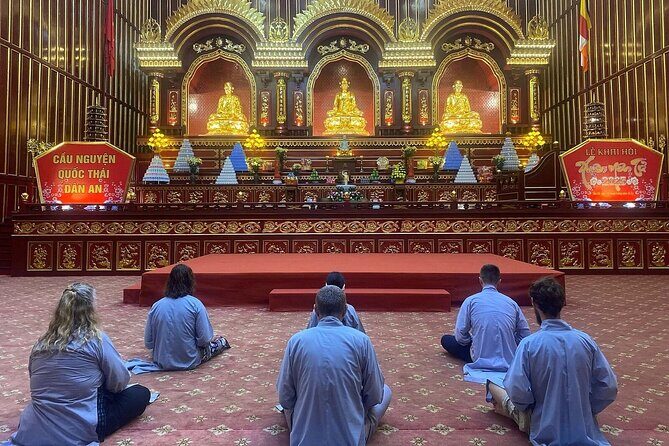
This retreat moves in chapters. You’ll feel it in the transitions: from arrival and cultural context, to full practice blocks, to final-day focus on mind and walking meditation.
Day 1: Arrival, tea meditation, and learning the frame
Your day starts with the transfer from Hanoi to Yen Tu, followed by a vegan lunch. After that, you begin to slow down with tea meditation (15:00–15:30). Tea meditation sounds small, but it’s a useful “on-ramp.” You practice attention with a real, simple object—taste, warmth, smell—so your mind learns what focusing feels like before you go into longer sits.
Later you get history about Holy Mount Yen Tu (15:30–17:00). This is a smart inclusion. If you know why this place is revered, your meditation doesn’t feel like abstract self-help. It feels like participation in a tradition.
Evening continues with vegan dinner and a longer science of meditation session (19:00–21:30). The wording is a bit modern-sounding, but the intent is practical: you’re given a way to understand the mind during practice, so you can work with what comes up instead of fighting it.
By the end of Day 1, you’re set up for a quieter relationship with sleep—less scrolling, more letting the day settle.
Day 2: Soul purification and chanting before breakfast
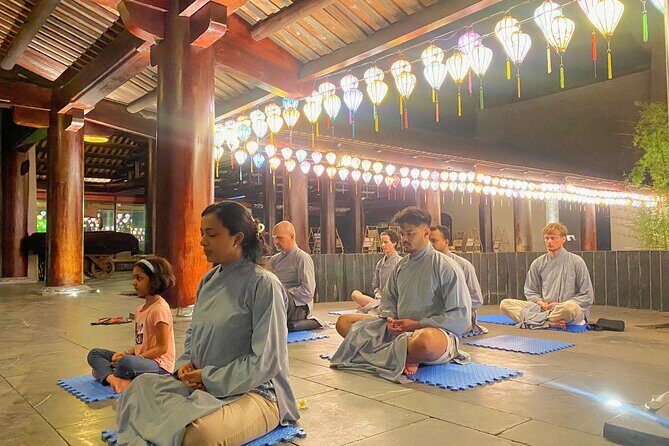
Day 2 begins early, with wake-up around 05:00. Then you move through a sequence built for clarity and emotional cleanup: soul purification meditation (05:45–06:10), followed by “bodhi mind” chanting (06:15–06:30).
Next comes breath and mindful movement—miracle breath & peace in every step (06:30–07:20). This part matters because it prevents meditation from becoming “only sitting.” You’re training attention to travel with you.
Breakfast (07:30–08:30) gives you a normal anchor after the early practice block. Then you continue into more teaching and guidance later in the day (the schedule is packed, and the retreat is built around multiple practice and learning segments).
Day 3: Mind understanding, walking meditation, and karma lessons
On the final day, you wake around 05:00 again. The morning starts with the understanding of the mind (05:45–06:30), then moves into mindful breathing & walking meditation along with fish feeding (6:30–8:00).
Fish feeding is one of those activities that can surprise people—in a good way—because it turns compassion into something you physically do, not just something you think about later. Paired with walking meditation, it reinforces the retreat’s basic idea: your practice shows up in ordinary actions.
After breakfast (8:00–9:00), you get karma law lessons in an outdoor venue (9:00–9:30). If you want meaning, this is a clean capstone. It ties the meditative training back to how Buddhists interpret cause, effect, and habit.
The retreat ends back at the meeting point.
Other 3-day, 2-night cruises we've reviewed

Buddhist teaching you can actually use in daily life
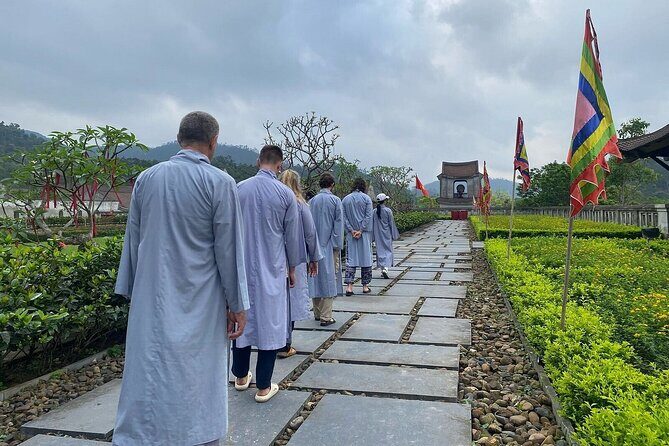
What I like about this retreat’s teaching is that it supports the practice rather than floating above it.
You’ll hear about Buddhism in structured ways, including:
- history about Holy Mount Yen Tu
- lessons like karma law (with an outdoor teaching block on Day 3)
- talks framed around meditation and the mind
This is the difference between a “culture visit” and a “practice retreat.” You leave with a mental model for what you’re doing. Even if you don’t become a Buddhist scholar, you get tools to notice what your mind does during meditation—restlessness, resistance, distraction—and how to work with it.
And the guide’s role is not just lecturing. Hung is described as knowledgeable and supportive, with guidance that’s client-oriented. That’s important. You want someone who can help you understand the practice without making you feel behind.
Also, the retreat includes cultural and mindful activities beyond pure sitting—tea meditation, chanting, and movement-based practice like qigong are part of the overall experience. In plain terms, it’s designed so your body learns too, not just your thoughts.
Vegetarian meals as part of the training (not just a perk)
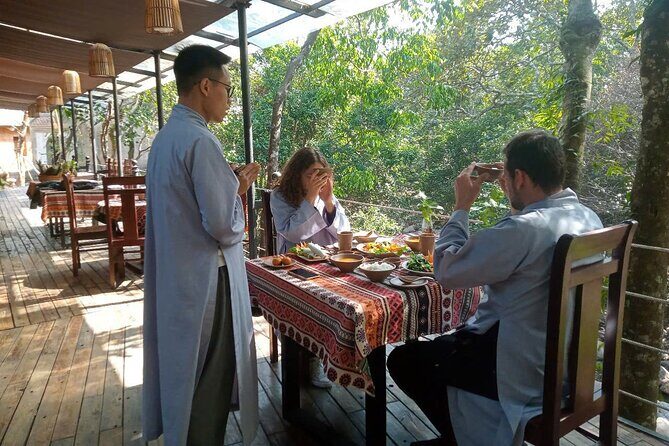
The retreat includes vegetarian meals throughout: vegan lunch on Day 1, vegan dinner on Day 1, and breakfast on Days 2 and 3. Food is provided, which keeps the retreat focused. You’re not making restaurant decisions while trying to change your mental rhythm.
More importantly, eating in a retreat setting tends to make you notice hunger, fullness, and cravings. That’s part of mindfulness practice—watching what arises and passing it along. The retreat doesn’t advertise complicated menus; it leans into simple vegetarian nourishment so you can keep your attention on the day.
One practical upside: because meals are included, you don’t need to budget time for searching. You can plan your day around practice blocks and rest.
Small group size: why up to 15 people can feel like a big advantage
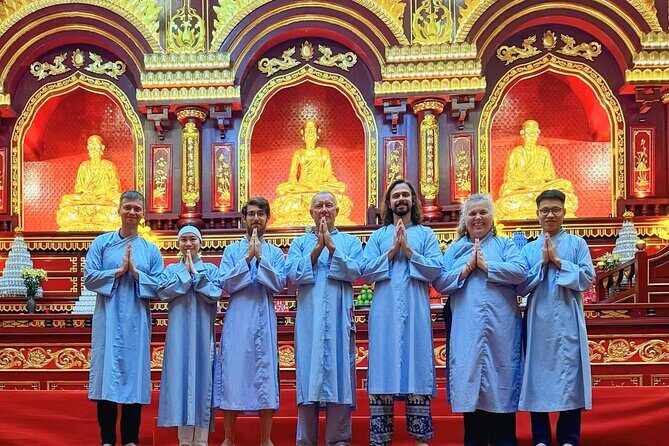
This retreat caps at 15 travelers. That’s a meaningful number. In a group that small, it’s easier for the guide to check in, answer questions, and adjust guidance so you’re not stuck copying a technique you don’t understand.
Based on past feedback, Hung’s teaching style is a big part of the positive experience. People praised him as kind and inspiring, and they highlighted professionalism and the feeling that the guide was paying attention to individuals—not just leading a script.
If you’re someone who freezes up in large classes, this group size is a strong reason to consider booking.
Price and value: what you’re paying for at $315
At $315 per person, this isn’t a “cheap weekend” deal—but it also isn’t trying to be luxury-priced.
What your money covers (from the details given) is a mix of:
- guided meditation sessions
- accommodation at the pagoda
- vegetarian meals (voted likely a major part of the experience)
- activities such as tea meditation, chanting, and mindful practices
- admission ticket included
You’re also getting a multi-day structure that starts early and stays disciplined. That kind of scheduling takes coordination on the provider’s side, and it’s part of the value. If you’ve ever tried to build a meditation routine yourself, you know how hard it is to keep momentum for three days straight—especially with dawn practice.
My take: if you want more than a sightseeing day and you’re serious about learning meditation and Buddhist concepts in a guided way, the price feels reasonable. If you only want a relaxing nature walk with a little calm, you may feel it’s more intense than you expected.
Logistics that can matter more than you think
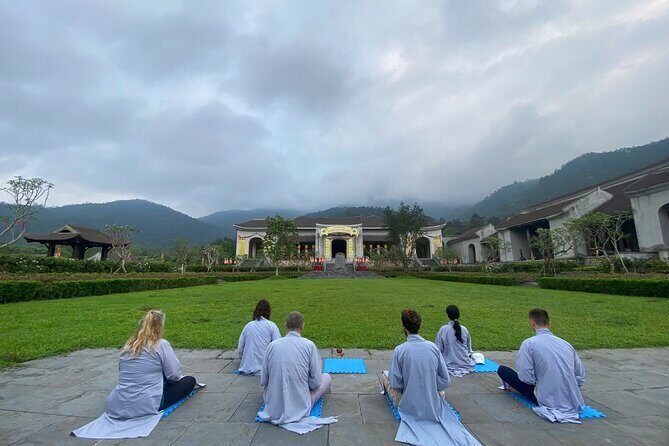
You’ll meet at Làng Nương Yên Tử (Yên Tử Village), Thượng Yên Công, Uông Bi, Quảng Ninh, Vietnam. The activity ends back at the meeting point, so you’re not left figuring out transport at the end.
Two other details worth noting:
- You get a mobile ticket.
- Confirmation is sent within 48 hours of booking, subject to availability.
Also, the meeting point lists opening hours of 8:30 AM to 12:00 PM (for the given date range). Your retreat schedule includes early-morning practice times, so it’s smart to confirm how those relate to your specific departure/arrival day.
On transport: it’s listed as near public transportation, which helps if you’re building your own Hanoi-to-Yen Tu plan.
Who should book this retreat (and who might not)
This retreat fits best if you want:
- guided meditation practice with structure
- Buddhist teachings connected to what you’re doing
- a calm environment where the day is organized for mental training
- vegetarian meals and pagoda accommodation handled for you
- a small group with up to 15 people
You might think twice if you:
- need long lie-ins and hate early wake-ups
- want mostly casual relaxation instead of repeated practice sessions
- are uncomfortable with chanting or breath-based instruction
The experience is designed for people ready for discipline. The payoff is that the quiet becomes real because you’ve lived it for days, not minutes.
What to bring and how to prepare
The data doesn’t list packing items, so I’ll keep this practical and general. For a three-day retreat with early mornings and mountain activity:
- Dress in comfortable layers you can move in, since mornings can feel cooler than midday.
- Bring a refillable water bottle if permitted by the retreat flow (meals are provided, but you still want hydration during activities).
- Wear supportive shoes for walking meditation and any temple/mountain paths.
- If you’re new to chanting or breath work, come curious rather than trying to get it perfect on Day 1.
Preparation tip: plan to be off your phone as much as possible. The retreat’s rhythm works because it’s harder to escape into distractions.
Should you book Journey to Inner Peace at Yen Tu?
I’d book it if you want a retreat that teaches the mind as a skill—through breathing, chanting, tea meditation, and Buddhist lessons like karma law—while also giving you real structure with meals and pagoda accommodation handled.
I wouldn’t book it if your idea of a vacation is sleep-in mornings and light, optional activities. This is a practice retreat with an early wake pattern and long guided sessions, including longer evening time on Day 1.
If you’re on the fence, here’s my simple decision rule: if you’re willing to trade comfort and noise for practice and learning, this retreat is a strong match.
FAQ
How long is the Journey to Inner Peace retreat?
It runs for 3 days (3 days and 2 nights).
Where does the retreat start and end?
It starts at Làng Nương Yên Tử (Yên Tử Village), Thượng Yên Công, Uông Bi, Quảng Ninh, Vietnam, and ends back at the same meeting point.
What is the price?
The price is $315.00 per person.
What’s included in the experience?
Guided meditation sessions, vegetarian meals, accommodation at the pagoda, and admission ticket are included. The retreat also features activities like tea meditation and chanting, plus Buddhist lessons.
Is there a mobile ticket?
Yes, it includes a mobile ticket.
How big is the group?
The maximum group size is 15 travelers.
How fast will I receive confirmation after booking?
Confirmation is provided within 48 hours of booking, subject to availability.
What is the cancellation policy?
You can cancel up to 6 days in advance for a full refund. Cancellations made 2–6 days before start time receive a 50% refund, and cancellations less than 2 days before are not refunded.
Is the retreat suitable for most people?
It’s listed as suitable for most travelers.